Theology
-

The Story of Scripture Part 7: A King Like David
When people witnessed Jesus heal a demon-possessed man who was blind and mute, their immediate response was to question whether he was the Messiah, the expected “Son of David” (Matt 12:23). Their question revealed the hopeful expectation first century Israel had of the coming Messiah. The title “Son of David” was not only a genealogical…
-

Christ Crucified
I recently re-watched the debates between John Lennox and Richard Dawkins. Dawkins levelled a specific complaint against Lennox regarding the Christian faith. He described the essence of the message as “petty”. He contrasts the grandeur of the observable universe with the specific details of Christian theology regarding the cross. He cannot reconcile the Creator of…
-
The Story of Scripture Part 6: “These Things are Written for You”
The Relevance of the Old Testament Understanding the relationship between the two testaments of the Bible is essential, yet the relevance of the Old Testament can be difficult to grasp, especially when distinctions are drawn between it and the New Testament. Many have come to neglect the Old Testament, dismissing it as stories for Sunday…
-

The First and Last Adam: Two Archetypes of Humanity
Adam stands as humanity’s primal prototype. Formed from dust, he bears the divine image yet failed in innocence. Christ, the Last Adam, succeeds through virtue. This comparison reveals how redemption restores our realised value, transforming us from mere bearers of the image into active reflectors of the Creator’s holiness.
-
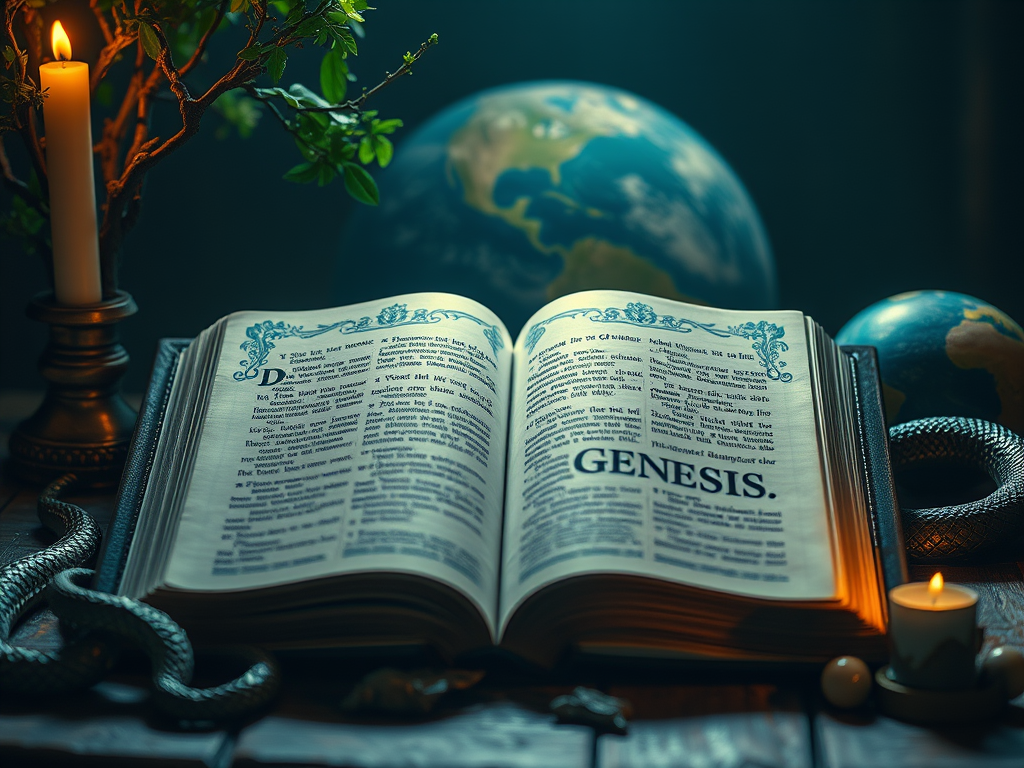
Introducing the Bible: The Book of Genesis
Genesis is the first book of the Bible. Its name comes from the Greek word for “origin” or “beginning,” as it documents the beginning of the created world, humanity, sin, and God’s plan of redemption. Genesis is also the first of the five books known as the Pentateuch or Torah. Pentateuch literally means “five scrolls”…
-
The Story of Scripture Part 5: The Feasts of Israel
The Feasts of Israel and the Messiah The seven feasts of Israel, given by God to Moses, are a significant and often misunderstood part of the Old Testament. They remembered past events, and pointed to the future, foreshadowing events to be fulfilled in the person and work of the Messiah. One thing to understand is…
-
The Story of Scripture Part 4: A Prophet Like Moses
A Prophet Like Moses The Old Testament unfolds God’s redemptive plan through progressive revelation. This revelation is largely brought about through the covenants, in which He establishes certain promises and certain boundaries within which He will act, and within which we are to remain. While each major covenant is a distinct agreement with its own…
-

What Ever Happened to Sin?
“Free will is necessary to holiness, just as it is to sin,” declared A. W. Tozer, “and if a man can’t sin he can’t be holy.” This statement highlights a tension in the Christian Walk. True holiness is not the response of an automaton; it is a choice made by a moral agent with the…
-

Love and Justice
In Christian theology, God’s love and justice are central to His nature, intrinsically linked yet expressed differently. While love is eternal and self-sufficient within the Trinity, justice is revealed in response to creation’s sin. The cross reconciles both attributes, satisfying justice while demonstrating love through sacrifice, offering redemption to believers.
-

Sanctification: Its Nature and Necessity
Introduction: More Than a Moment The Christian faith is sometimes presented as nothing more than a one-time decision—a moment of conversion that secures a ticket to heaven. Justification is a glorious, foundational truth of the gospel, but it is the gateway, not the entire journey of a life in Christ. The path that follows this…
You must be logged in to post a comment.